High-Performance Silicon Nitride Si3N4 Degassing Rotor for Aluminum Foundry
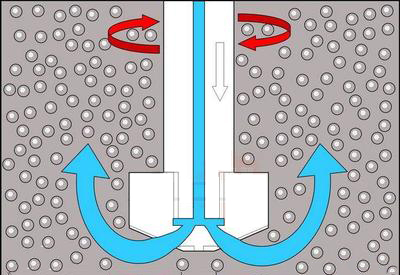
Working Principle:
In the aluminum alloy melting and casting process, molten aluminum easily absorbs hydrogen and forms oxide inclusions, leading to porosity and defects in final castings.
Rotary Gas Injection: The Silicon Nitride Si3N4 rotor rotates at high speeds (typically 300–600 RPM), shearing inert gas (Nitrogen or Argon) into millions of ultra-fine bubbles and dispersing them evenly throughout the molten aluminum.
Hydrogen Removal & Inclusion Flotation: Driven by partial pressure differentials, dissolved hydrogen diffuses into the rising bubbles, while floating oxide inclusions adhere to the bubble surfaces and are carried up to the dross layer.
Material Advantage: Unlike graphite, Si3N4 ceramic does not react with molten aluminum or generate carbon flakes, ensuring purer melt quality and higher degassing efficiency (exceeding 85% hydrogen removal).
Service Life Comparison:
| Material Type |
Average Service Life |
Oxidation Resistance |
Aluminum Erosion Resistance |
Replacement Frequency |
| Standard Graphite Rotor |
7 – 20 Days |
Poor (Oxidizes rapidly above 400°C) |
Low |
Very High |
| Coated Graphite Rotor |
20 – 40 Days |
Moderate |
Moderate |
High |
| Silicon Nitride ($\text{Si}_3\text{N}_4$) Rotor |
12 – 24 Months |
Exceptional (No oxidation) |
Extremely High |
Ultra Low |
Economic & ROI Analysis:
While the upfront investment of a silicon nitride rotor is higher than a graphite rotor, it delivers an exceptional Return on Investment (ROI) within a short period:
Lower Total Consumable Cost: 1 Silicon Nitride rotor outlasts 15 to 30 graphite rotors. Annual purchasing costs for rotor consumables are reduced by up to 50%–60%.
Reduced Downtime & Labor: Eliminates frequent rotor changes and preheating downtime, increasing foundry equipment operational availability by 5%–10%.
Lower Casting Scrap Rates: Zero graphite erosion means no secondary carbon contamination. Cleaner molten metal reduces casting porosity defects, saving tens of thousands of dollars annually in scrap reduction.
Inert Gas Savings: The optimized head design creates finer bubbles, achieving superior degassing performance while cutting gas consumption by 15%–25%.


